
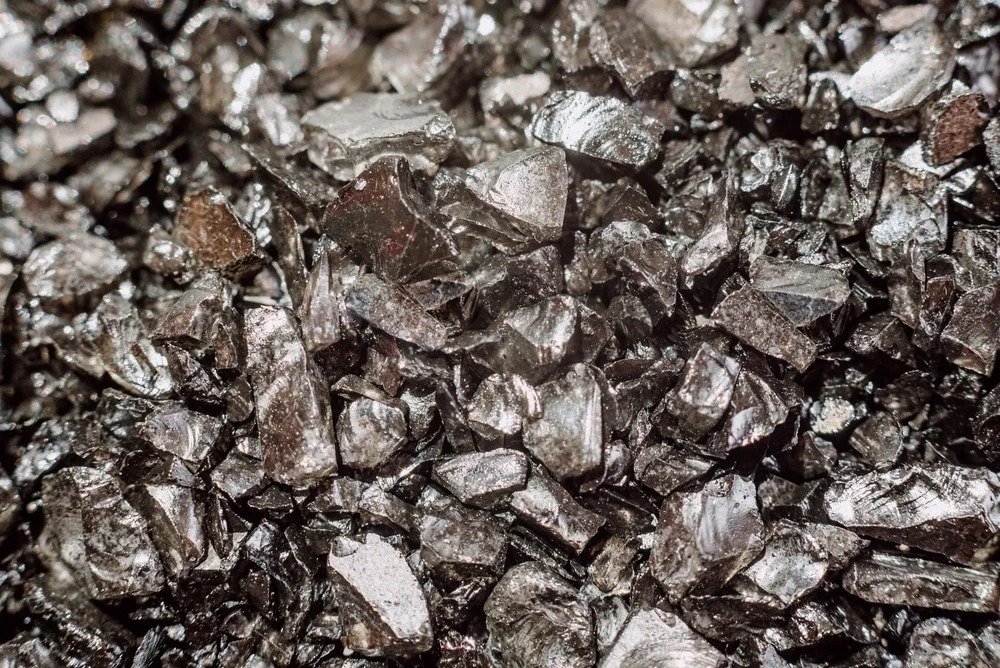
Buy Germanium with 99.9% Purity Guaranteed
$4 700,00
Germanium may no longer be the king of computer chips, but it has found an indispensable niche in the modern world. It is the invisible backbone of the internet and the eyes of our defense systems.
As demand for faster data transmission and advanced space exploration grows, the unique optical and electronic properties of Germanium ensure it will remain a strategic resource for decades to come.
Germanium is the grandfather of the digital age. Before Silicon Valley existed, the first transistors were built using Germanium. While it has largely been replaced by silicon in standard computer chips, this metalloid remains a critical “technology metal” for high-end applications.
From the fiber optic cables that carry the internet to the night vision goggles used by the military, Germanium possesses unique optical and electronic properties that no other element can match.
This guide explores the features, chemistry, and specialized uses of this fascinating semiconductor.
What is Germanium?
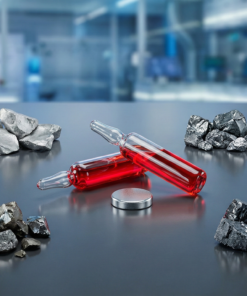
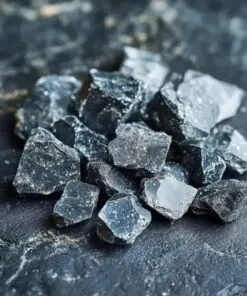
Germanium (symbol Ge) is a lustrous, hard-brittle, grayish-white metalloid in the carbon group, chemically similar to its neighbors tin and silicon.
It was discovered in 1886 by Clemens Winkler, a discovery that validated Dmitri Mendeleev’s periodic table (Mendeleev had predicted its existence as “eka-silicon” years earlier). Today, Germanium is rarely mined directly. Instead, it is recovered as a by-product of zinc ore processing and coal fly ash.
Because it is a semiconductor, it can conduct electricity under certain conditions, making it the material that enabled the invention of the solid-state transistor in 1947.
Key Features of Germanium
Germanium is defined by three specific characteristics that drive its high market value:
- Infrared Transparency: Unlike glass, Germanium is transparent to infrared (heat) radiation. This means it acts like a clear window for thermal cameras.
- High Refractive Index: It bends light significantly more than glass or silicon, which is essential for wide-angle lenses and optical fibers.
- High Electron Mobility: Electrons move through Germanium faster than they do through silicon, making it ideal for ultra-high-speed electronics.
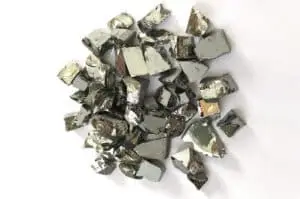
Germanium
Why Choose Germanium?
In a world dominated by cheap silicon, why do engineers still choose the more expensive Germanium?
1. Superior Night Vision
Standard glass is opaque to thermal radiation—if you put a glass lens on a heat-seeking camera, it would be blind. Germanium is the material of choice for infrared optics because it allows heat signatures to pass through with minimal absorption. This is vital for military targeting systems, firefighting equipment, and night-vision capabilities in luxury cars.
2. Fiber Optic Efficiency
In fiber optic networks, data travels as light. Germanium is used to dope the core of fiber optic cables. This increases the refractive index, ensuring the light stays trapped inside the cable (total internal reflection) and travels long distances without signal loss.
3. High-Speed Performance
While silicon is great for general computing, it hits a speed limit. Germanium-Silicon alloys (SiGe) are used in high-frequency wireless devices (like radar and Wi-Fi) because they switch on and off much faster than pure silicon, consuming less power in the process.
Applications of Germanium
The uses of Germanium are highly specialized, focusing on optics and efficiency.
1. Fiber Optics (30% of Global Use)
This is the largest sector. Germanium tetrachloride is used to manufacture the glass core of fiber optic lines, enabling high-speed internet across the globe.
2. Infrared Optics (20-30% of Global Use)
Germanium is cut and polished into lenses for thermal imaging cameras. These are used in:
- Border security surveillance.
- Satellite remote sensing.
- Automotive night-vision assistants.
3. Solar Panels
Germanium is a substrate for high-efficiency multi-junction solar cells. These are not the panels on your roof, but the ones used in space. Mars rovers and satellites use Germanium-based solar cells because they are incredibly efficient at converting sunlight into electricity, even in harsh conditions.
4. PET Plastics
Germanium serves as a catalyst for producing polyethylene terephthalate (PET)—the plastic used in water bottles and food containers. It creates a plastic that is exceptionally clear and bright.

Properties of Germanium
Here is the technical profile of this metalloid.
| Property | Value/Description |
| Chemical Symbol | Ge |
| Atomic Number | 32 |
| Appearance | Grayish-white, metallic luster |
| Density | 5.323 g/cm³ |
| Melting Point | 938 °C (1,720 °F) |
| Boiling Point | 2,833 °C (5,131 °F) |
| Crystal Structure | Diamond Cubic |
| Band Gap | 0.66 eV (Semiconductor) |
Frequently Asked Questions (FAQs)
Is Germanium rare?
Yes, Germanium is considered a critical raw material. It is not found as a native metal and is relatively scarce in the Earth’s crust (about 1.6 ppm). Most supply comes from China, which produces the majority of the world’s refined Germanium.
Is Germanium toxic?
Elemental Germanium is considered to have low toxicity. However, some inorganic Germanium compounds (like Germanium hydride) are toxic. Conversely, certain organic Germanium supplements are sold for “health benefits,” though the FDA warns that these can cause kidney damage and are not medically proven.
Why did Silicon replace Germanium in computers?
Although Germanium was used for the first transistors, it has a major flaw: it stops working at high temperatures (above 75°C), becoming a regular conductor rather than a semiconductor. Silicon can withstand much higher temperatures (up to 150°C) and forms a natural insulating oxide layer, making it cheaper and easier to manufacture for mass electronics.
Can Germanium be recycled?
Yes. Because it is valuable, Germanium is frequently recycled from scrap tank periscopes, old fiber optic cables, and manufacturing waste. Recycling accounts for roughly 30% of the global supply.
Be the first to review “Buy Germanium with 99.9% Purity Guaranteed”
Related products
RARE EARTH & INDUSTRIAL PECIOUS METAL
RARE EARTH & INDUSTRIAL PECIOUS METAL
RARE EARTH & INDUSTRIAL PECIOUS METAL
RARE EARTH & INDUSTRIAL PECIOUS METAL
RARE EARTH & INDUSTRIAL PECIOUS METAL
RARE EARTH & INDUSTRIAL PECIOUS METAL
RARE EARTH & INDUSTRIAL PECIOUS METAL
Reviews
There are no reviews yet.