Buy Silicon with 99.9% Purity Guaranteed
$1 300,00
Silicon is the unsung hero of our daily lives. It captures the energy of the sun, calculates the data of the internet, and holds up the roofs over our heads. Its unique electronic properties and durability have made it indispensable in advancing technology and industry.
Whether you are in electronics manufacturing, construction, or renewable energy, Silicon is the fundamental element that drives innovation.
Silicon is the bedrock of the modern world. It is so fundamental to human progress that we named the global capital of technology—Silicon Valley—after it. From the microchips powering your smartphone to the concrete foundations of your home, this element is everywhere.
As the second most abundant element in the Earth’s crust, Silicon bridges the gap between the natural world and the digital frontier.1 It is the defining material of the 21st century, driving innovation in industries from technology to construction.2
This guide explores the unique features, chemical properties, and vast applications of this versatile metalloid.
What is Silicon?
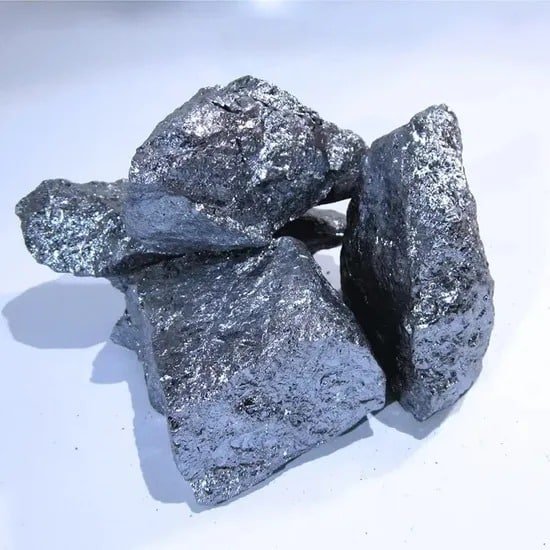
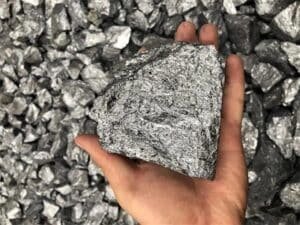
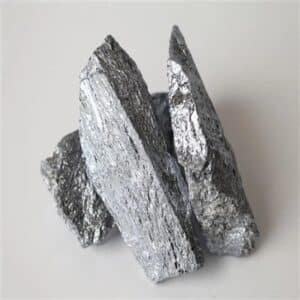
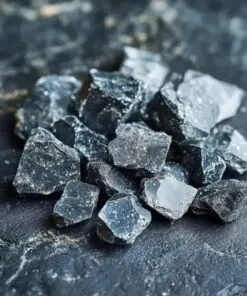
Silicon (symbol Si) is a hard, brittle crystalline solid with a blue-grey metallic luster.3 It sits at number 14 on the periodic table and is classified as a metalloid, meaning it possesses characteristics of both metals and non-metals.4
While it is rarely found in its pure form in nature, it is incredibly abundant. It makes up more than 27% of the Earth’s crust by mass, usually bound with oxygen to form silica (sand) or silicates (rocks like granite).5
Its ability to act as a semiconductor—conducting electricity under some conditions but acting as an insulator under others—makes it the ideal switch for the binary logic (0s and 1s) used in computing.6
Key Features and Data
Here is the technical profile that makes Silicon an industrial powerhouse.
| Feature | Data |
| Chemical Symbol | Si |
| Atomic Number | 14 |
| Appearance | Lustrous, bluish-gray metallic sheen |
| State at Room Temp | Solid |
| Molecular Weight7 | 28.0855 g/mol8 |
| Density | 2.33 g/cm³ |
| Melting Point | 1,414°C (2,577°F) |
| Boiling Point | 2,355°C (4,271°F) |
The Unique Properties of Silicon
Silicon exhibits a unique combination of metallic and non-metallic qualities that few other elements can match.
Semi-conductivity
This is its most famous property. By adding small impurities (“doping”) to Silicon, engineers can precisely control the flow of electricity through it.9 This control is what allows a tiny microchip to process billions of calculations per second.
Thermal Stability
Silicon has high thermal stability and resistance to oxidation.10 It can withstand the intense heat involved in manufacturing processes without melting or degrading. This makes it essential for high-temperature applications, such as engines and industrial furnaces.
Glass Formation
When Silicon bonds with oxygen, it forms silica (SiO2).11 This compound has a high melting point but, when cooled rapidly, forms an amorphous solid—glass. This property is the foundation of the entire optics and window industry.
Why Choose Silicon?
With competitors like Germanium and Gallium Arsenide available, why does the world stick with Silicon?
1. Abundance and Cost
Silicon is incredibly cost-effective because it is literally as common as dirt (or sand).12 Unlike rare earth metals, the supply chain for silica is stable and widely distributed globally.13
2. Oxide Protection
When exposed to air, Silicon naturally forms a thin layer of silicon dioxide on its surface.14 This layer acts as a perfect electrical insulator, protecting the circuitry underneath. This natural feature simplifies the manufacturing of microchips significantly.
3. Versatility
It is a “Jack of All Trades.” Whether you need a structural material (concrete), a transparent material (glass), or a logic material (chips), Silicon compounds can do the job.
Major Applications
The applications of Silicon span almost every sector of the global economy.
1. Electronics (The Digital Backbone)
Pure Silicon wafers form the backbone of integrated circuits (ICs) and microchips.15 Every computer, smartphone, smart TV, and modern car relies on these wafers to function.16
2. Solar Energy
Silicon is the primary material used in the production of photovoltaic (PV) cells.17 Its atomic structure is perfectly suited to absorb sunlight and knock electrons loose to create an electric current.18
- Monocrystalline Silicon: High efficiency, used in premium panels.19
- Polycrystalline Silicon: Lower cost, used in budget-friendly panels.20
3. Construction
In the form of sand and clay (silicates), Silicon is the primary ingredient in:
- Concrete: The foundation of modern infrastructure.
- Bricks: Used for housing and walls.
- Glass: Windows, bottles, and fiber optics.
4. Alloys
Metallurgical grade Silicon is added to aluminum to create strong, lightweight alloys.21 These are used extensively in the automotive industry to cast engine blocks and parts that reduce vehicle weight and improve fuel economy.22
5. Silicones
Not to be confused with the element itself, Silicones are synthetic polymers made from silicon, oxygen, carbon, and hydrogen. They are heat-resistant and rubber-like, used in:
- Sealants and adhesives (bathroom caulk).
- Lubricants and greases.
- Medical implants and cookware (spatulas).
Silicon vs. Silicone: What’s the Difference?
This is the most common confusion regarding this element.
- Silicon (Si): A naturally occurring chemical element. It is a hard, brittle solid used in chips and solar panels.23
- Silicone: A synthetic man-made polymer (plastic/rubber). It is flexible, water-resistant, and used in sealants and medical devices.
Think of it this way: Silicon is the microchip in your phone; Silicone is the rubber case protecting it.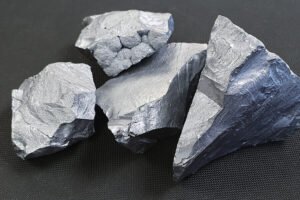
Frequently Asked Questions (FAQs)
Is Silicon toxic?
Elemental Silicon is non-toxic. However, breathing in fine silicate dust (crystalline silica) over long periods can cause a lung disease called silicosis.24 This is a major occupational hazard for miners and construction workers.25
Where is Silicon found?
It is rarely found free in nature. It is almost always found in minerals like quartz, feldspar, mica, and sand. The Sahara Desert is essentially a massive ocean of Silicon dioxide.
Can we run out of Silicon?
Practically speaking, no. Since it makes up over a quarter of the Earth’s crust, we will not run out of the raw material. However, the capacity to refine it into “99.99999% pure” electronic-grade Silicon can sometimes face supply bottlenecks.
Why is Silicon Valley called that?
It was named “Silicon Valley” in the early 1970s because of the high concentration of semiconductor manufacturers in the region (Santa Clara Valley) that used Silicon to make chips.
Is Silicon a metal?
No, it is a metalloid. It looks like a metal (shiny and grey) but behaves like a non-metal chemically. It conducts electricity better than a non-metal, but worse than a true metal like copper.
Be the first to review “Buy Silicon with 99.9% Purity Guaranteed”
Related products
RARE EARTH & INDUSTRIAL PECIOUS METAL
RARE EARTH & INDUSTRIAL PECIOUS METAL
RARE EARTH & INDUSTRIAL PECIOUS METAL
RARE EARTH & INDUSTRIAL PECIOUS METAL
RARE EARTH & INDUSTRIAL PECIOUS METAL
RARE EARTH & INDUSTRIAL PECIOUS METAL
RARE EARTH & INDUSTRIAL PECIOUS METAL
Reviews
There are no reviews yet.